

The red sage vs ginkgo biloba comparison starts with two different species and two different source materials. Red sage supplements commonly use the root and rhizome of Salvia miltiorrhiza. Ginkgo supplements most often use the leaves of Ginkgo biloba. Research about one material cannot be transferred to the other simply because both products appear in the botanical supplement category.
Garden Organics frames this as an evidence-matching problem, not a contest between ingredients. A useful comparison identifies the species, plant part, preparation, extract specification, and amount before considering whether a study resembles a retail product.
Are red sage and Ginkgo biloba botanically related?
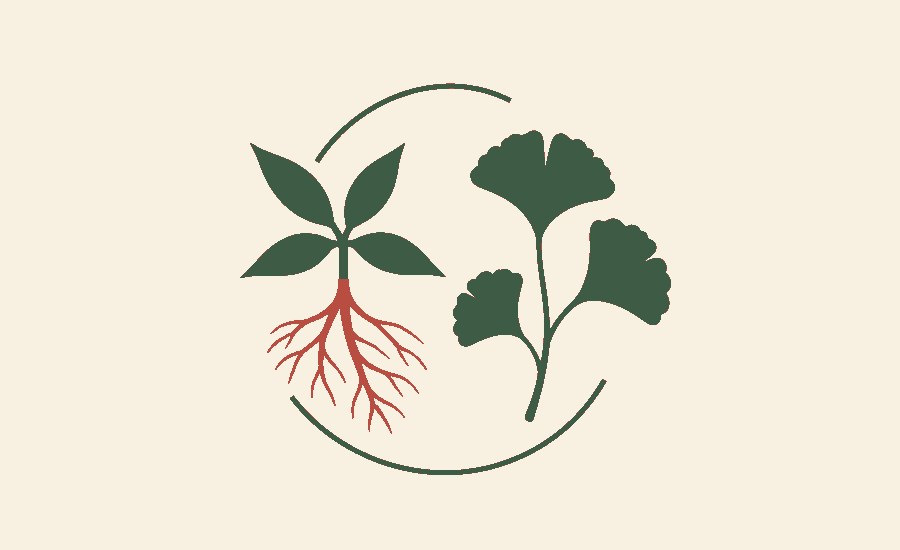
No. They come from separate branches of plant taxonomy. Red sage, usually identified as Salvia miltiorrhiza Bunge, belongs to the mint family, Lamiaceae. It is a perennial flowering herb.
Ginkgo biloba L. belongs to Ginkgoaceae. It is a deciduous tree and the only living species in the genus Ginkgo. The difference is broader than root versus leaf. The plants also differ in growth form, family, reproductive biology, and chemical composition.
| Comparison point | Red sage | Ginkgo biloba |
|---|---|---|
| Typical botanical identity | Salvia miltiorrhiza Bunge | Ginkgo biloba L. |
| Plant family | Lamiaceae | Ginkgoaceae |
| Growth form | Perennial herb | Deciduous tree |
| Common supplement material | Root and rhizome | Leaf |
| Common preparations | Powder, capsules, dry extract, liquid extract | Leaf powder, capsules, tablets, refined dry extract, liquid extract |
| Common specification focus | Root identity, extraction method, phenolic acids, tanshinones | Leaf identity, extract ratio, flavone glycosides, terpene lactones |
| Primary comparison risk | Applying root research to an unmatched capsule | Applying standardized extract research to plain leaf powder |
Why does root-derived versus leaf-derived matter?
Roots and leaves perform different functions for a plant. They contain different structures and proportions of naturally occurring compounds. Processing them with the same solvent does not produce equivalent extracts.
Red sage references commonly define the source material as dried root and rhizome. Ginkgo references define the source material as leaf. These materials require separate identity tests, extraction specifications, and quality markers.
Red sage root and rhizome
A root anchors the plant and absorbs water and minerals. A rhizome is a modified underground stem. Formal red sage specifications may include both structures as one herbal raw material.
Red sage preparations may contain water-soluble phenolic compounds and less water-soluble diterpenoid compounds known as tanshinones. Their proportions depend on the plant material and extraction process. A plain root powder, water extract, and alcohol-based extract should not be treated as chemically identical.
Ginkgo leaf
Modern ginkgo supplements commonly use leaf material. Refined and quantified ginkgo extracts can include declared ranges for flavone glycosides and terpene lactones. They may also control unwanted constituents through processing and specification limits.
Those specifications describe a particular leaf extract category. They do not describe ginkgo seeds, unrefined plant material, or another botanical root.
Can plain powders and standardized extracts be compared directly?
No. A plant powder retains ground raw material. An extract uses a solvent to remove selected constituents from the starting botanical. The solvent may then remain in a liquid preparation or be removed to form a dry extract.
A standardized or quantified extract adds another layer. The manufacturer measures selected marker compounds and aims to keep them within declared ranges. The resulting product is more specifically defined than a capsule labeled only with the weight of leaf or root powder.
| Preparation | What the declared amount may represent | Evidence-matching limitation |
|---|---|---|
| Whole plant powder | Weight of ground root, rhizome, or leaf | Does not automatically match an extract study |
| Dry extract | Weight after extraction and solvent removal | Requires the extract ratio and solvent for context |
| Liquid extract | Volume or weight of the total liquid preparation | Requires carrier, solvent, and concentration details |
| Quantified extract | Extract controlled within defined constituent ranges | Applies only to sufficiently similar specifications |
| Standardized extract | Extract adjusted or selected for named markers | The term alone does not identify the complete preparation |
What does a standardized ginkgo extract actually mean?
A meaningful standardization statement identifies more than the word "standardized." It should name the measured compounds and provide their declared amounts or ranges.
One preparation defined in an EMA monograph uses a dry ginkgo leaf extract with a drug-to-extract ratio of 35-67:1 and acetone at 60 percent by mass as the extraction solvent. That specification describes one defined preparation. It does not establish a universal formula for every ginkgo supplement.
Commercial ginkgo products may use different extract ratios, solvents, marker ranges, or plain leaf powder. A study involving a refined and quantified extract should not be assigned to a product that lacks comparable specifications.
Standardization is not a shared scale
Red sage and ginkgo use different marker systems. A percentage of ginkgo flavone glycosides cannot be compared with a percentage of red sage tanshinones as though both values measured the same property.
Markers help identify and control a preparation. They do not convert unrelated botanicals into one evidence category.
How should a Red Sage capsule be compared with ginkgo?
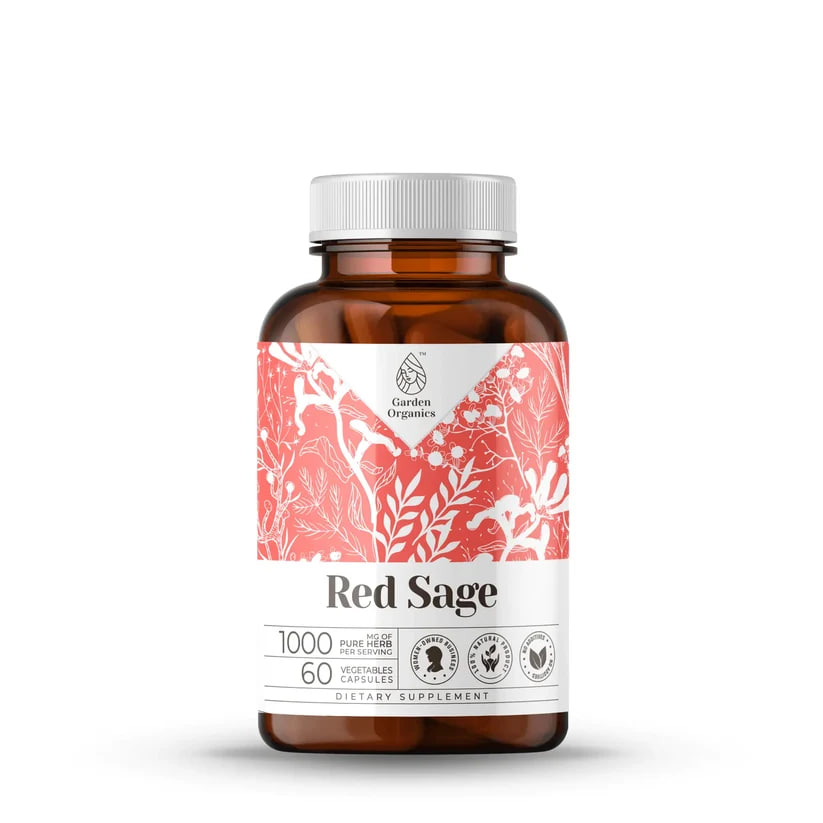
A plant-part comparison can contrast a defined ginkgo leaf extract with a Red Sage capsule option. The Red Sage listing provides a retail example of a capsule containing root-based material, but the physical label remains the primary source for species, amount, preparation, and other ingredients.
Garden Organics would record each product independently before creating a side-by-side comparison. The Red Sage entry should capture the Latin name, root or rhizome declaration, powder or extract status, serving size, and amount. The ginkgo entry should capture the same fields for its leaf material.
If one product provides an extract ratio and marker specification while the other lists only raw-material weight, the comparison should state that the formats differ. It should not convert both amounts into an invented equivalent.
When can research be connected to a retail product?
Research is most relevant when the studied material closely matches the product. A common name or capsule format provides too little information.
Match the species
Confirm Salvia miltiorrhiza for red sage and Ginkgo biloba for ginkgo. Common names can be incomplete or used inconsistently across markets.
Match the plant part
Root and rhizome research belongs to a different material category from leaf research. The plant part should match even when the species does.
Match the preparation
Determine whether the study used raw powder, a water extract, an alcohol-based liquid, or a refined dry extract. Extraction changes which constituents enter the finished preparation.
Match the specification
Compare the drug-to-extract ratio, extraction solvent, marker compounds, and marker ranges. A named proprietary extract should not be treated as interchangeable with an unspecified botanical powder.
Match the amount and serving unit
Record whether the study and product amounts refer to raw botanical material, total extract, selected compounds, or liquid volume. Capsule counts alone are not comparable quantities.
Check whether the product is a blend
Evidence for a single ingredient does not automatically describe a multi-ingredient formula. Other botanicals and nutrients create a different finished product.
Why is the front label not enough?
The front panel usually emphasizes the product name and format. The Supplement Facts panel and ingredient list contain the details needed for evidence matching.
For a botanical supplement, check the scientific or standardized common name, plant part, amount per serving, serving size, and other ingredients. Extract labels may also provide the solvent, concentration, or drug-to-extract ratio.
The word "premium," "advanced," or "standardized" cannot replace these fields. Neither can a broad category such as root supplement, leaf supplement, or herbal capsule.
Root and Leaf Supplement Comparison Checklist
Use this checklist before connecting red sage or ginkgo research to a retail product. Complete every step for each product separately, then compare the recorded fields.
Confirm the species
Find the Latin binomial or an accepted standardized common name. Record the wording exactly as it appears.
Identify the plant part
Check for root, rhizome, leaf, or another stated part. Do not infer the material from the product name.
Classify the preparation
Separate plain powder, dry extract, liquid extract, and refined quantified extract into different categories.
Read the extract ratio
Record the drug-to-extract or botanical-to-extract ratio. Mark the field as unknown when the label omits it.
Check the extraction solvent
Look for water, ethanol, acetone, glycerin, or another declared solvent. Different solvents can produce different constituent profiles.
Record the markers
Write down each named marker and its declared amount or range. Do not compare unrelated markers as equivalent measurements.
Capture the serving amount
Note the quantity per serving and what that quantity represents. Distinguish raw material from finished extract.
Match the study preparation
Compare the species, part, solvent, ratio, markers, and amount with the research material. Describe major differences clearly.
FAQ
Are red sage and Ginkgo biloba the same plant?
No. Red sage usually means Salvia miltiorrhiza, while ginkgo means Ginkgo biloba.
Which part of red sage is used in supplements?
Red sage supplements and formal references commonly use the root and rhizome.
Which part of Ginkgo biloba is commonly used?
Modern ginkgo supplements most commonly use the leaf, often as a dry extract.
Can red sage root research be applied to ginkgo leaf?
No. The species, plant part, preparation, and constituent profile are different.
Is ginkgo leaf powder the same as ginkgo extract?
No. Leaf powder is ground raw material. An extract is produced by processing the leaf with a solvent.
Does every ginkgo extract use the same standard?
No. Products may differ in extract ratio, solvent, marker ranges, and refinement process.
Can two capsule products be compared by milligrams?
Not by milligrams alone. First determine whether each amount describes plant powder, total extract, or selected compounds.
Glossary
Botanical identity
The verified scientific identity of a plant ingredient.
Plant part
The structure used as raw material, such as root, rhizome, leaf, seed, or bark.
Rhizome
A modified underground stem that differs botanically from a root.
Dry extract
An extracted preparation from which the extraction solvent has been removed.
Drug-to-extract ratio
The relationship between the starting botanical material and the resulting extract.
Marker compound
A selected constituent measured to characterize or standardize an extract.
Quantified extract
An extract adjusted or produced to keep selected constituents within defined ranges.
Evidence matching
The process of comparing a studied material with the specifications of a retail product.
Conclusion
Red sage root and ginkgo leaf belong to separate botanical and evidence categories. Match the species, plant part, preparation, extract specification, and amount before connecting research to a product.
Sources Used
- Accepted taxonomy and classification of Salvia miltiorrhiza - powo.science.kew.org/taxon/urn:lsid:ipni.org:names:456707-1
- Accepted taxonomy and classification of Ginkgo biloba - powo.science.kew.org/taxon/urn:lsid:ipni.org:names:262125-1
- European assessment overview for Salvia miltiorrhiza root and rhizome - ema.europa.eu/en/medicines/herbal/salviae-miltiorrhizae-radix-et-rhizoma
- European monograph and preparation definition for ginkgo leaf - ema.europa.eu/en/medicines/herbal/ginkgo-folium
- NIH overview of ginkgo leaf and extract formats - nccih.nih.gov/health/ginkgo
- NIH background on botanical extracts and standardization - ods.od.nih.gov/factsheets/BotanicalBackground-Consumer
- FDA guidance on plant-part, serving, and extract declarations - fda.gov/food/dietary-supplements-guidance-documents-regulatory-information/dietary-supplement-labeling-guide-chapter-iv-nutrition-labeling
- Retail page reviewed for the Red Sage capsule example - gardenix.com/products/red-sage-capsules