

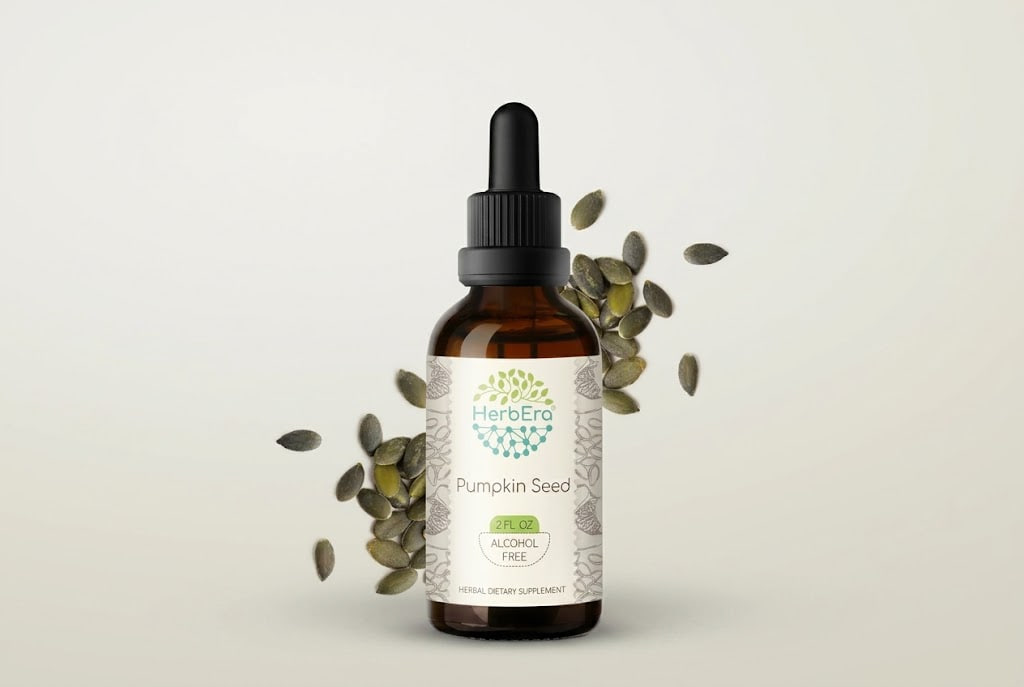
Pumpkin seed oil vs black seed oil sounds like a comparison between two related seed products. It is not. The oils come from separate botanical families, have different characteristic compounds, and appear in different culinary, supplement, and cosmetic categories. This guide explains how to identify each oil and compare their labels without assuming equivalent uses. HerbEra applies a source-first rule to this type of comparison: confirm the species and format before discussing composition.
The short answer is clear. Pumpkin seed oil usually comes from seeds of a Cucurbita species. Black seed oil usually comes from Nigella sativa. Their shared use of the word seed does not make them botanically related or functionally interchangeable.
Do pumpkin seed oil and black seed oil come from the same plant family?
No. The source plants belong to different botanical families and orders.
Pumpkin seed oil may come from Cucurbita pepo, Cucurbita maxima, or another identified pumpkin or squash species. The genus Cucurbita belongs to the Cucurbitaceae family. This family also includes cucumbers, melons, gourds, and other squashes.
Black seed oil is generally made from the dark seeds of Nigella sativa. This annual flowering plant belongs to the Ranunculaceae family. It is not a pumpkin relative and does not belong to the same family as botanical cumin.
| Feature | Pumpkin seed oil | Black seed oil |
|---|---|---|
| Typical botanical source | Cucurbita species | Nigella sativa |
| Plant family | Cucurbitaceae | Ranunculaceae |
| Plant order | Cucurbitales | Ranunculales |
| Source material | Pumpkin or squash seeds | Small dark Nigella seeds |
| Common alternative names | Pepita oil, pumpkin kernel oil | Black cumin seed oil, nigella oil |
| Botanical relationship | The source plants are not closely related | |
Why does the name black seed oil cause confusion?
Black seed is a common name, not a complete botanical identity. In the supplement market, it usually refers to Nigella sativa, but regional naming can create ambiguity.
Nigella sativa may also be called black cumin, black caraway, kalonji, or nigella. These names do not make the plant identical to true cumin, Cuminum cyminum, or true caraway, Carum carvi. Those plants belong to the Apiaceae family.
Black sesame oil is another separate product. It comes from dark seeds of Sesamum indicum. A label that says only black seed oil without a scientific name leaves an avoidable identification gap.
For a reliable comparison, the black seed oil label should identify Nigella sativa. The pumpkin oil label should state the applicable Cucurbita species when the product is sold as a botanical supplement.
How are pumpkin seed oil and black seed oil produced?
Both oils may be obtained through mechanical pressing, but production details vary. Roasting, refining, filtration, temperature, and extraction method can change the finished oil.
Pumpkin seed oil production
Producers clean and prepare pumpkin kernels before pressing. Some traditional culinary oils use roasted seeds. Roasting creates a stronger aroma and darker color. Other products use unroasted seeds and lower-temperature pressing.
The oil may remain unrefined or undergo additional filtration and refining. These steps affect flavor, color, minor compounds, and storage characteristics. The phrase cold-pressed describes part of the process, but it does not establish the complete chemical profile.
Black seed oil production
Black seed oil may also be mechanically pressed from cleaned Nigella sativa seeds. Some products use solvent extraction or specialized processes such as supercritical carbon dioxide extraction.
Different extraction conditions can change oil yield and the concentration of volatile or minor constituents. A pressed oil should not be assumed to match a concentrated extract merely because both come from the same seed.
Processing information matters
Terms such as virgin, raw, pure, unfiltered, premium, and extra strength do not provide a standardized chemical specification by themselves. Look for measurable details such as species, pressing method, refining status, batch number, and declared constituents.
How does their composition differ?
Both products are lipid-rich seed oils, but their fatty acid patterns and minor constituents are not identical.
Pumpkin seed oil profile
Research on pumpkin seed oils commonly identifies linoleic, oleic, palmitic, and stearic acids. Their proportions vary by species, cultivar, growing conditions, seed preparation, and extraction method.
Pumpkin seed oil may also contain tocopherols, phytosterols, carotenoid-related pigments, and roasting-derived volatile compounds. No single research sample represents every commercial oil.
Black seed oil profile
Nigella sativa oil also contains a mixture of fatty acids. It is additionally studied for quinones and aromatic constituents, including thymoquinone. The amount of thymoquinone can vary substantially between seeds, regions, extraction methods, and finished products.
A black seed oil label should not imply a defined thymoquinone amount unless the product is tested and the quantity is clearly declared. The presence of this constituent in published research does not establish its concentration in an untested bottle.
Whole-seed data do not equal oil data
Pressing separates the lipid fraction from much of the solid seed material. The resulting oils do not retain the complete fiber and protein profiles of whole pumpkin or nigella seeds. Whole-seed nutrition values should not be copied into an oil description.
How do flavor, color, and culinary use compare?
The oils usually have distinct sensory profiles, but processing can alter both.
Unrefined pumpkin seed oil often has a roasted, nutty flavor and a dark green, brown, or reddish appearance. It is commonly used as a finishing oil in dressings, soups, dips, and other foods where its flavor remains noticeable.
Black seed oil often has a sharper, more aromatic, peppery, or bitter profile. Its intensity varies by seed origin and production method. It may be sold as a culinary oil, dietary supplement, or cosmetic ingredient.
Check the intended-use statement before cooking with either product. A cosmetic oil is not automatically intended for ingestion. A dietary supplement may also provide directions that differ from those of a conventional cooking oil.
Heat suitability depends on refining, composition, and manufacturer guidance. Do not assume that every cold-pressed oil is designed for high-temperature cooking.
Can pumpkin seed oil replace black seed oil?
Not as a botanical equivalent. They come from different species and contain different combinations of constituents.
In a recipe, substitution may be possible when flavor is the only criterion, but the result will taste different. Pumpkin seed oil is generally nutty, while black seed oil is often sharper and more aromatic.
In research or supplement comparisons, the oils should remain separate. Findings involving Nigella sativa oil should not be assigned to pumpkin seed oil. The reverse is also true.
Shared bottle size, serving unit, or shelf category does not establish equivalence. Direct comparison requires matching study designs, tested materials, analytical profiles, and measured criteria.
What changes when an oil is compared with a tincture?
The comparison becomes even more format-specific when an oil is contrasted with Pumpkin Seed Tincture from HerbEra. A seed oil and a tincture use different carriers and extraction principles.
Pressed oil contains the lipid fraction removed from the seed. A tincture commonly uses ethanol and water, glycerin, or another declared liquid system to extract selected constituents. A tincture is not diluted pumpkin seed oil unless the ingredient list specifically states that oil is present.
Oil nutrition data should not be assigned to a tincture. A tincture should be evaluated through its botanical species, plant part, solvent, extract ratio, serving size, and product-specific analysis.
| Label feature | Pressed seed oil | Botanical tincture |
|---|---|---|
| Primary carrier | The seed's extracted lipid fraction | Often ethanol-water, glycerin, or another stated liquid |
| Production principle | Mechanical pressing or oil extraction | Selective solvent extraction |
| Typical serving unit | Milliliters, teaspoons, or softgels | Milliliters, drops, or droppers |
| Expected material profile | Fatty acids and oil-soluble constituents | Constituents transferred by the chosen solvent |
| Key label details | Species, pressing, refining, oil amount | Species, plant part, solvent, extract ratio |
Can research results be transferred between the two oils?
No. Research on one botanical oil does not directly establish the properties of another oil.
Even studies of the same plant may use different materials. One publication may examine roasted pumpkin seed oil, while another uses oil from unroasted seeds. A black seed study may use cold-pressed oil, a volatile fraction, isolated thymoquinone, or a concentrated extract.
Before connecting a study to a retail product, confirm:
- The botanical species.
- The seed or other plant part used.
- The extraction or pressing method.
- The refining and storage conditions.
- The measured constituents.
- The amount and serving unit.
- The product category and intended route.
If these details differ, the study may provide botanical background but not direct evidence for the product being reviewed.
Seed Oil Label Checklist
Use this checklist before comparing pumpkin seed oil with black seed oil. It helps separate botanical identity, production, and product format from front-label wording.
Confirm the scientific name
Look for the exact Cucurbita species or Nigella sativa. Avoid relying on common names alone.
Verify the plant part
Confirm that the oil comes from seeds. Do not assume that every botanical oil uses the same part of the plant.
Identify the product category
Determine whether the item is a culinary oil, dietary supplement, cosmetic oil, softgel, tincture, or concentrated extract.
Read the production details
Check for roasting, cold pressing, solvent extraction, filtration, and refining.
Review the ingredient list
Look for carrier oils, flavors, preservatives, blended oils, and capsule materials.
Compare matching serving units
Compare oils by equivalent volume or weight. Do not compare one dropper with one tablespoon without identifying the underlying materials.
Check batch information
Look for a lot number and product-specific analytical documentation when composition is important to the comparison.
Match the research format
Use studies involving the same species, oil type, extraction method, and measured constituent profile.
FAQ
Are pumpkin seed oil and black seed oil the same?
No. Pumpkin seed oil comes from Cucurbita seeds, while black seed oil usually comes from Nigella sativa.
Are the source plants in the same family?
No. Pumpkin belongs to the Cucurbitaceae family. Nigella sativa belongs to the Ranunculaceae family.
Is black seed oil the same as black cumin oil?
Black cumin oil often refers to Nigella sativa oil, but common names vary. Confirm the scientific name on the label.
Is black seed oil the same as black sesame oil?
No. Black sesame oil comes from Sesamum indicum, while black seed oil usually refers to Nigella sativa.
Can the oils be substituted in cooking?
They may be exchanged in some recipes, but their flavors differ substantially. Follow the product's stated culinary and heat-use guidance.
Does black seed oil always contain the same amount of thymoquinone?
No. Concentration varies with seed source, processing, storage, and testing. Use only a quantity declared through relevant product data.
Is pumpkin seed tincture the same as pumpkin seed oil?
No. Oil contains a lipid-rich seed fraction, while a tincture uses a liquid solvent to extract a different range of constituents.
Can research on black seed oil apply to pumpkin seed oil?
No. The oils come from different plants and should be assessed through separate evidence.
Glossary
Black seed
A common name usually referring to the dark seeds of Nigella sativa.
Botanical identity
The scientific classification used to establish the exact plant source of an ingredient.
Cold-pressed
A mechanical oil-production method that uses controlled temperatures during pressing.
Fatty acid profile
The types and relative proportions of fatty acids present in an oil.
Phytosterol
A plant-derived compound found in the lipid fraction of many seeds and oils.
Refined oil
Oil processed to modify characteristics such as flavor, color, odor, or stability.
Seed oil
The lipid-rich fraction obtained from seeds through pressing or another extraction method.
Thymoquinone
A quinone compound studied as a characteristic constituent of Nigella sativa oil.
Tincture
A filtered liquid botanical extract commonly prepared with ethanol, water, glycerin, or a combination of carriers.
Tocopherol
A member of the vitamin E compound family found in varying amounts in plant oils.
Conclusion
Pumpkin seed oil and black seed oil come from unrelated plants and should not be treated as botanical substitutes. Compare their species, processing methods, labels, and research separately.
Sources Used
- Pumpkin taxonomy and plant family, Plants of the World Online - powo.science.kew.org/taxon/urn:lsid:ipni.org:names:292416-1
- Black seed taxonomy and plant family, Plants of the World Online - powo.science.kew.org/taxon/urn:lsid:ipni.org:names:711687-1
- Botanical plant-part and liquid extract labeling, Dietary Supplement Labeling Guide Chapter IV - fda.gov/food/dietary-supplements-guidance-documents-regulatory-information/dietary-supplement-labeling-guide-chapter-iv-nutrition-labeling
- Commercial pumpkin seed oil composition and processing study, Journal of the Science of Food and Agriculture - pubmed.ncbi.nlm.nih.gov/22936573
- Pumpkin cultivar oil and tocopherol composition study, Journal of Agricultural and Food Chemistry - pubmed.ncbi.nlm.nih.gov/17439238
- Quinone analysis in Nigella seed oil, Journal of Pharmaceutical and Biomedical Analysis - pubmed.ncbi.nlm.nih.gov/10698539
- Extraction conditions and composition of Nigella seed oil, Molecules - pubmed.ncbi.nlm.nih.gov/34770828